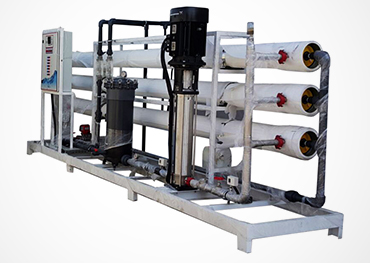
Brackish Water RO System 200000 GPD
Aqua Pro Water Treatment Equipment LLC. AquaPro Brackish Water 200000
GPD ( 750000 Litters Per Day) R.O. Water Treatment Plants are designed
to treat surface-level Commercial & industrial water and it involves
auto-backwashing multimedia filters and cartridge filters,
anti-scaling dosing, RO desalination system.
Description
Brackish Water RO System in Abu Dhabi
In the realm of critical infrastructure, water security is the ultimate asset. For facility managers and industrial operators in the UAE, the shift away from energy-intensive thermal desalination is not just a trend—it is a strategic necessity. A 200,000 GPD (Gallons Per Day) brackish water reverse osmosis (BWRO) plant represents a sweet spot in capacity: large enough to support significant industrial operations or community blocks, yet modular enough to be deployed rapidly.
Implementing a Brackish Water RO System in Abu Dhabi offers a robust solution for treating groundwater with moderate salinity, reducing reliance on the municipal grid while adhering to the Emirate’s stringent sustainability goals. This article outlines the technical roadmap, financial considerations, and operational nuances of commissioning a system of this caliber.
Why Brackish RO is Critical for Abu Dhabi’s Future
The water landscape in the UAE is undergoing a profound transformation. Historically, the region relied heavily on thermal desalination. However, recent policy shifts and strategic insights—highlighted by major infrastructure reports—point toward a future dominated by membrane-based technologies like Reverse Osmosis (RO). This shift is driven by a need to decouple water production from power generation and to dramatically reduce carbon footprints.
For inland operations, relying solely on piped seawater is often logistical nonsense. This is where a Brackish Water RO System in Abu Dhabi becomes a high-value asset. It taps into available groundwater aquifers or treats industrial process water that has moderate Total Dissolved Solids (TDS). Whether for agricultural irrigation, industrial cooling, or potable use in remote camps, brackish RO provides autonomy. It aligns perfectly with the Department of Energy’s push for sustainable, integrated water management, turning challenging water sources into reliable liquid assets.
Decoding the Capacity: What 200,000 GPD Delivers
When we discuss a 200,000 GPD system, we are talking about a substantial volume of water: approximately 758 cubic meters per day (m³/day). To contextualize this figure, this volume is generally sufficient to support:
- A medium-sized industrial manufacturing plant’s daily process needs.
- A residential compound or labor accommodation housing approximately 2,500 to 3,000 people.
- Extensive landscape irrigation for large-scale commercial properties.
In terms of recovery—the efficiency with which the system extracts clean water from the feed—a standard Brackish Water RO System in Abu Dhabi typically operates between 70% and 85%, depending heavily on the feed water chemistry. The permeate (product water) quality usually boasts a 95% to 99% salt rejection rate, rendering it suitable for sensitive industrial applications or, with post-treatment, human consumption.
Site Assessment and Feed Water Characterization
Before a single membrane is ordered, a meticulous site assessment is required. Investing in a Brackish Water RO System in Abu Dhabi without a comprehensive water analysis is a risk no serious operator should take. The specific hydrogeology of the site dictates the design.
Key parameters to analyze include:
- TDS (Total Dissolved Solids): Brackish water typically ranges from 1,000 to 10,000 ppm.
- Silt Density Index (SDI): A crucial measure of fouling potential.
- Specific Ions: High levels of silica, iron, or manganese require specialized pretreatment to prevent irreversible membrane damage.
- Temperature and pH: These factors influence membrane performance and scaling potential.
Furthermore, adhering to local regulations regarding groundwater abstraction is non-negotiable. Securing the necessary permits from the Environment Agency – Abu Dhabi (EAD) ensures that your asset remains compliant and operational for the long term.
Process Design and Main Components
A well-engineered 200,000 GPD plant is a symphony of hydraulic precision. The architecture of a reliable Brackish Water RO System in Abu Dhabi generally follows a specific train:
Pretreatment
This is the guardian of your investment. Depending on the water analysis, this stage may include multi-media filters to remove particulates, cartridge filters (typically 5-micron) for polishing, and chemical dosing systems for antiscalants and dechlorination.
High-Pressure Pumps
The heart of the system. For brackish water, operating pressures are significantly lower than seawater desalination, typically ranging between 10 to 25 bar. High-efficiency pumps are selected to minimize energy consumption while maintaining consistent flow.
RO Pressure Vessels and Membranes
The core separation technology. Leading membrane elements, such as those from Dow FilmTec or Hydranautics, are housed in fiberglass pressure vessels. The design may utilize a multi-stage array to maximize recovery rates.
Post-Treatment & Control
Once the water is purified, it is often stabilized via pH adjustment and disinfected (chlorination or UV) for storage. The entire operation is overseen by a PLC (Programmable Logic Controller) and SCADA system, allowing for precise monitoring and automation.
Performance Metrics and Energy Efficiency
One of the primary advantages of choosing a Brackish Water RO System in Abu Dhabi over seawater alternatives is energy efficiency. Seawater RO is energy-intensive due to the high osmotic pressure required. In contrast, brackish systems typically consume between 0.5 to 2.0 kWh/m³ of produced water.
To optimize this further, modern designs incorporate Variable Frequency Drives (VFDs) on pumps, allowing the motor speed to adjust based on real-time demand. While Energy Recovery Devices (ERDs) are standard in seawater plants, their inclusion in brackish systems depends on the specific pressure and economic feasibility, but they remain an option for maximizing efficiency.
Brine Management and Environmental Stewardship
Every RO process generates a concentrate stream, known as brine. For a 200,000 GPD plant operating at 75% recovery, roughly 50,000 GPD of concentrated brine must be managed responsibly.
In the regulatory context of Abu Dhabi, indiscriminate discharge is not an option. Disposal methods must be environmentally sound and approved by authorities. Common strategies include:
- Evaporation Ponds: Suitable for inland sites with high evaporation rates.
- Deep Well Injection: Storing brine in confined aquifers deep underground (requires strict geological study).
- Zero Liquid Discharge (ZLD): An advanced (albeit more expensive) option that treats brine to recover solid salts and remaining water.
Managing the environmental footprint of your Brackish Water RO System in Abu Dhabi is as crucial as managing the production itself.
Integration with Renewables
The synergy between desalination and renewable energy is a focal point of the UAE’s infrastructure strategy. There is immense potential to pair a Brackish Water RO System in Abu Dhabi with solar photovoltaic (PV) arrays. Given the high solar irradiance in the region, a hybrid grid-solar setup can significantly lower OpEx (Operational Expenditure) and insulate the facility from energy price fluctuations, reinforcing the asset’s long-term value.
Operation, Monitoring, and Maintenance
Ownership of high-value infrastructure requires a commitment to maintenance. A Brackish Water RO System in Abu Dhabi is not a “set and forget” appliance; it requires skilled oversight.
Routine protocols include:
- Clean-in-Place (CIP): Periodic chemical cleaning of membranes to remove fouling and scaling.
- Instrument Calibration: Ensuring flow meters and conductivity sensors provide accurate data.
- Consumables Management: Timely replenishment of antiscalants and filter cartridges.
- Remote Monitoring: Utilizing digital dashboards to track Key Performance Indicators (KPIs) such as normalized permeate flow and salt rejection.
Cost Considerations: CAPEX and OPEX
Investing in a water treatment plant involves a careful balance of Capital Expenditure (CAPEX) and Operational Expenditure (OPEX). Major cost drivers for a Brackish Water RO System in Abu Dhabi include:
- CAPEX: High-quality pumps, pressure vessels, instrumentation, and civil works for the plant housing.
- OPEX: Energy consumption, chemical costs, membrane replacement (typically every 3-5 years), and labor.
There is often a trade-off: investing in higher-quality, energy-efficient pumps and durable membranes upfront (higher CAPEX) will invariably lead to lower energy bills and replacement costs over the system’s lifecycle (lower OPEX).
Regulatory Compliance and Approvals
Navigating the regulatory landscape is a prerequisite for operation. A Brackish Water RO System in Abu Dhabi must adhere to the water quality standards set forth by the Abu Dhabi Department of Energy and the Regulation and Supervision Bureau (RSB). Whether the water is intended for potable use or industrial application, regular testing and certification are mandatory to ensure safety and compliance.
Snapshot: Typical System Specification
System Capacity: 200,000 GPD (approx. 31.5 m³/hr)
Feed Water TDS: 2,000 – 6,000 ppm
Recovery Rate: 75% (Design Dependent)
Membrane Type: 8-inch Brackish Water Composite Polyamide
Vessel Array: 2-Stage Configuration (e.g., 4:2 array)
Estimated Power: 1.0 – 1.5 kWh/m³
Pretreatment: Multi-media filtration + 5-micron cartridge filtration
Risks, Challenges, and Mitigation
Even the finest engineering faces challenges. Common risks include unexpected fluctuations in feed water quality, which can lead to rapid fouling. Supply chain delays for specific spare parts can also disrupt operations.
Mitigation lies in preparation. Conducting pilot studies before full-scale implementation of a Brackish Water RO System in Abu Dhabi helps anticipate fouling issues. Furthermore, maintaining a strategic stock of critical spares and engaging in a comprehensive Operations & Maintenance (O&M) contract ensures that expertise is always on hand to resolve issues swiftly.
Conclusion and Next Steps
A 200,000 GPD BWRO plant is more than just machinery; it is a strategic investment in reliability. For stakeholders in the region, deploying a Brackish Water RO System in Abu Dhabi offers a path to water independence, operational efficiency, and alignment with national sustainability mandates.
By understanding the technical requirements and regulatory landscape, you transform a necessity into a secure asset.
For those ready to assess the feasibility of such a system for their site, the next step involves a detailed water analysis and a consultation with specialized engineers.
Related products
-
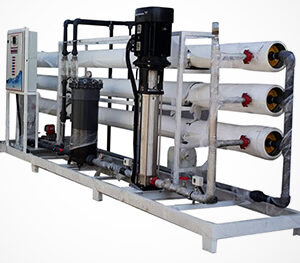
Brackish Water RO System 50000 GPD
Brackish Water RO System 50000 GPD by Aquapro around assimilation would attempt to decontaminate water that comes from a well, lake, or waterway. The cycle in which the water goes through to be unaView Details
Aqua Pro Water Treatment Equipment LLC. AquaPro Brackish Water 50000
GPD ( 187500 Litters Per Day) R.O. Water Treatment Plants are designed
to treat surface-level Commercial & industrial water and it involves
auto-backwashing multimedia filters and cartridge filters,
anti-scaling dosing, RO desalination system. -
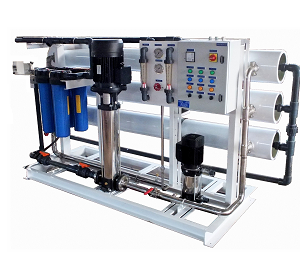
Brackish Water RO System 10000 GPD
🧪💧 Get a Free Water Analysis & Custom RO Quote Today!
Get expert testing and a tailored 10,000 GPD RO design for your Abu Dhabi site—absolutely free.
⚡💸 Upgrade to Reliable, Low-Cost Water — Request Your 10,000 GPD RO Proposal Now!
Reduce tanker-water expenses and secure a continuous, high-quality water supply.
👨🔧📞 Talk to Our RO Experts in Abu Dhabi — Find the Perfect System for You!
-
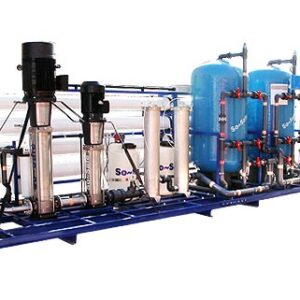
Brackish Water RO System 150000 GPD
Frameworks of the Brackish Water RO System 150000 GPD by Aquapro with further developed pressure driven motion plans can diminish the speed of fouling and cleaning, be more energy-proficient, and iView Details
Aqua Pro Water Treatment Equipment LLC. AquaPro Brackish Water 150000
GPD ( 562500 Litters Per Day) R.O. Water Treatment Plants are designed
to treat surface-level Commercial & industrial water and it involves
auto-backwashing multimedia filters and cartridge filters,
anti-scaling dosing, RO desalination system. -
Brackish Water RO System 100000 GPD
An expanding number of Brackish Water RO System100000 GPD by Aquapro and NF (Nanofiltration) frameworks are being planned and worked on high saltiness saline feed water sources which might go to 10View Details
Aqua Pro Water Treatment Equipment LLC. AquaPro Brackish Water 100000
GPD ( 375000 Litters Per Day) R.O. Water Treatment Plants are designed
to treat surface-level Commercial & industrial water and it involves
auto-backwashing multimedia filters and cartridge filters,
anti-scaling dosing, RO desalination system.


Reviews
There are no reviews yet.